
Signs your baby is ready for solids
At around 6 months of age, your baby will be ready to start solids. Whilst some babies may show some signs of readiness before 6 months, breastmilk or formula will continue to provide all of your baby’s nutritional needs, meaning solid foods are not needed as a form of nourishment before 6 months. It is important that babies are not provided any solid foods before 4 months.
How to start offering solids

There is no one way that is best to introduce your baby to solid foods. How you choose to wean should be about how you and your baby feel most comfortable exploring food. Some common ways to introduce solids include:
Traditional/spoon-led weaning
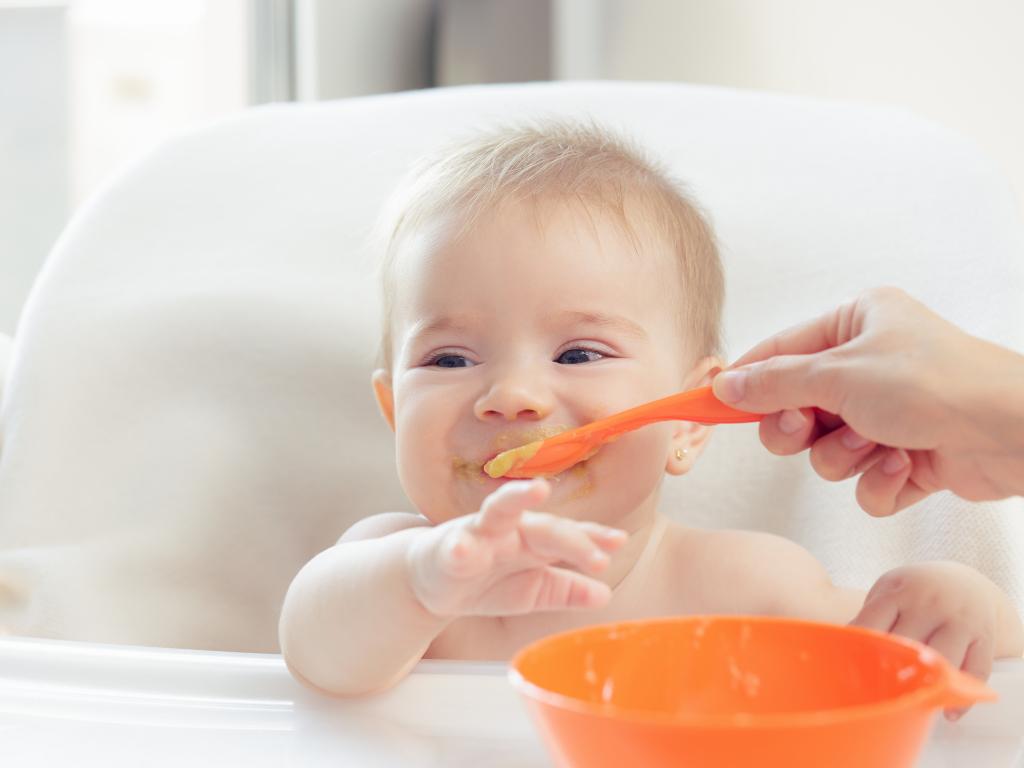
Traditional spoon feeding starts with offering your baby foods that are pureed in to a smooth consistency, and gradually moving up through lumpier ‘mashed’ textures until soft solids are offered. Some benefits of this feeding style include less mess at mealtimes, less food wasted by being dropped or smeared, and it can be easier to see how much baby has eaten at each meal. An important consideration is that with this feeding style there are fewer opportunities for sensory exploration or practising self-feeding skills.
Baby led weaning (BLW)
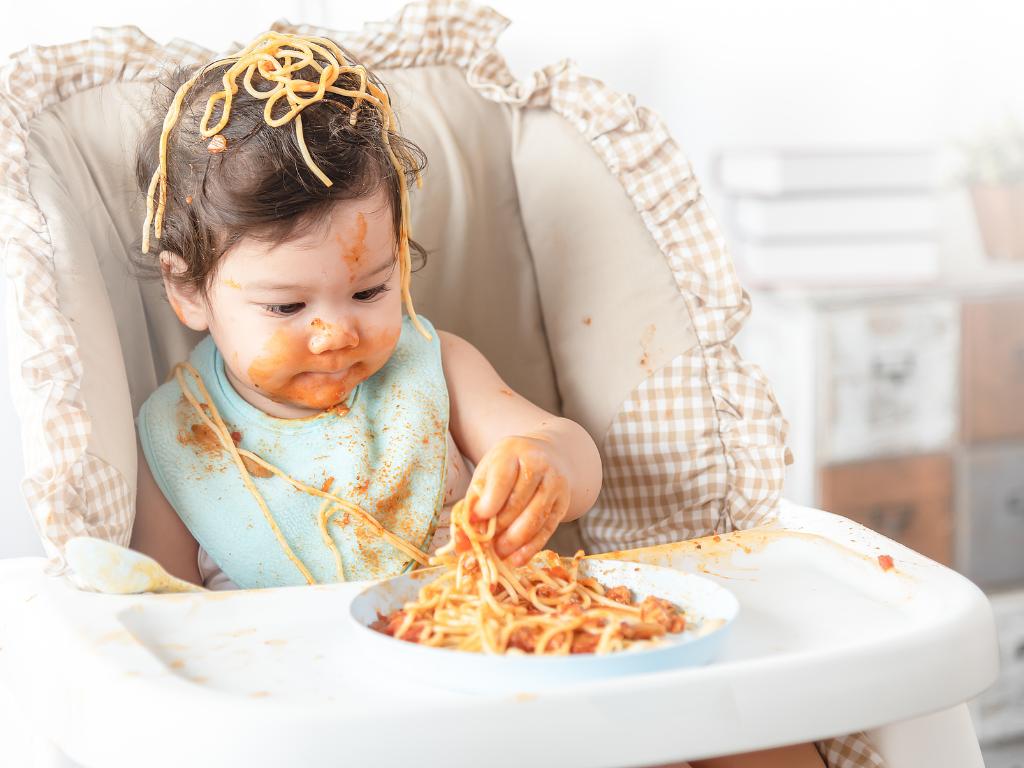
Baby-led weaning consists of offering finger-foods, instead of the traditional purees. These are usually foods that are soft enough for your baby to mash with their gums, and should be served in long strips that are easy to hold. Reported benefits of this weaning style include lots of opportunities to build self-feeding skills, more sensory exploration during meals, and some families find it easier to transition to family-style foods later on. Important considerations for BLW include that it is often messier, may generate more food waste, and may increase the risk of choking if foods are not appropriately prepared*.
*The risk of choking can be reduced if foods are prepared appropriately, and ensuring children are always well supervised while eating.
Combined feeding
This feeding method combines the approaches (and benefits!) of both traditional and BLW, using strategies of both across different meals or days. This approach then offers a variety of sensory experiences, self-feeding skill building opportunities, and a range of flavours, textures, and foods. This feeding method is the most flexible, and can be modified to suit each day.
Food textures
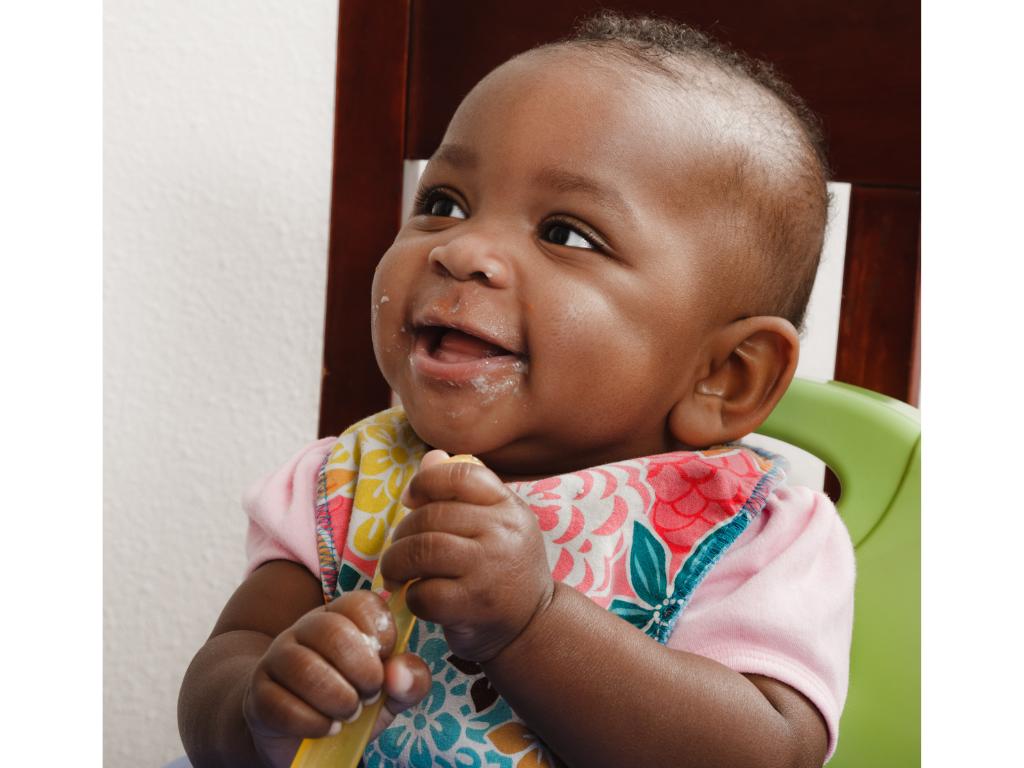
Research has shown that infants are most open to learning about new textures between 4-9months old, so offering a range of textures for them to explore is a great option. Here’s some common ‘texture’ terms you might hear about, and what they mean.
- Smooth/puree: Smooth and lump-free, such as commercial baby foods or home made in a blender. These purees are often thin and runny, pouring easily from a spoon.
- Lumpy: These are foods that have been blended, but still have some small, soft lumps and bumps remaining. They are often a bit thicker than a smooth puree. Some common examples include foods like porridge, soft mashed potato, or chia pudding.
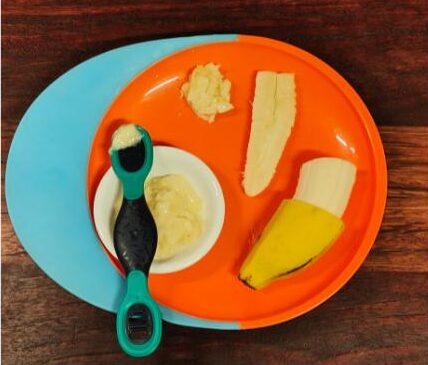
- Mash: A thicker, lumpier texture, that can be achieved simply by mashing foods with a fork. Foods suitable for this are usually very soft, like avocado, banana, cooked beans, or steamed pumpkin.
- Minced: These foods have lumps that are small, but may be chewier or harder, such as finely minced meats, soft cooked lentils, or very finely shredded vegetables.
- Soft cooked/soft chewable: These are pieces of foods that are cooked until they are soft enough that you could easily squish them with your fingers, which require some chewing. They can be small, bite-sized pieces, or served as larger chunks for baby to bite from. Foods like steamed or roasted vegetables are perfect for this, such as pumpkin, zucchini, or sweet potato fingers. Tender slow-cooked meats are another common example of this texture.
- Finger Foods: Any food that can be picked up by your baby for self-feeding, often served as long, finger-width strips to make it easier for babies to grasp. This can range from homemade foods like roasted pumpkin strips, pieces of fresh banana, or toast cut in to soldiers, or commercial products like infant puffs or rusks.
- Dissolvable: These are foods that ‘melt’ in the mouth without chewing, such as infant puffs, freeze-dried yogurt drops, and some cereals.
- Hard munchables: These are stick-shaped pieces of hard, resistant foods that are difficult to break pieces off, such as raw carrot or celery sticks, pineapple cores, hard teething rusks, or stale sourdough bread crusts. It is important to note that while the aim is to be hard enough that children cannot bite off small pieces, this can still occur sometimes and so can present a choking hazard. Children should always be closely supervised when eating.
Choking and safety
- Supervision: Always supervise baby while they are eating. This means baby should be within arm’s length of a parent or trusted adult (not left with older siblings). It is not recommended to allow infants to eat in situations where they are outside of this reach or cannot be actively supervised, such as in a car seat.
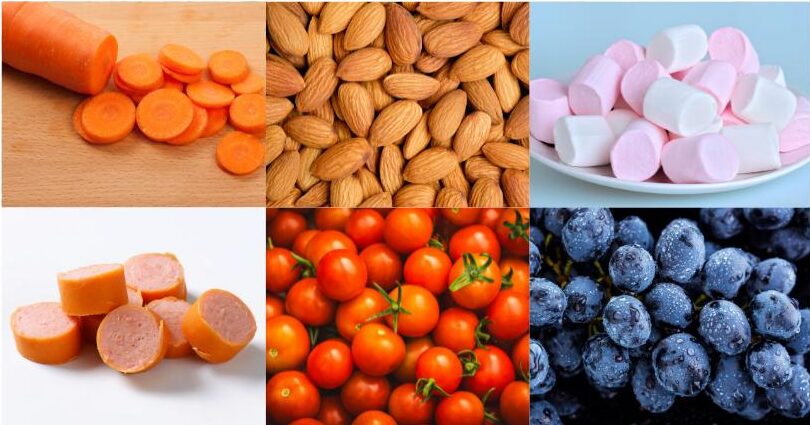
- Avoid hard, round foods: baby’s airway is significantly smaller than ours. Small, round items such as whole blueberries, cherry tomatoes, marshmallows, or whole nuts fit snuggly across the diameter of their airway, preventing them from breathing. Anything smaller than a 20c coin can be a choking hazard for young children.
- Limit distractions: Another way to reduce the risk of choking is to remove distractions such as screens or toys while baby is eating. Eating is a complex new task they are still learning, with lots of skills to coordinate!
- Positioning: ensuring your child is seated appropriately helps to prevent choking. Children should be seated upright and well supported, such as in a high chair, whenever they are eating. Lying down, walking, or crawling while eating all increase the risk of choking.
Choking vs Gagging
- Choking: Choking is when a food or object blocks the airway, preventing normal breathing. Choking is often silent, as it is difficult to get enough air in to cough or cry out. Choking is an emergency where your child is unable to clear their airway independently, and needs help immediately.
- Gagging: Gagging is a protective reflex we are all born with, and is a normal part of learning to eat. Gagging is triggered when something touches the back of the tongue before swallowing, and the body naturally responds to move it away from the airway. This is referred to the gag reflex. If your child is gagging, you should continue to supervise them closely to ensure they are able to remove the food themselves, but you do not need to intervene unless they are unable to remove the food themself. Instead, model staying calm and providing verbal reassurance for your child while they manage the food themselves.
Younger infants who gag often may have a stronger tongue extrusion reflex, which will usually continue to reduce over time. Other reasons for gagging include infants learning where they need to position foods in their mouths to swallow safely, or how much food they can fit in their mouths, and so gagging is common as they practice learning to eat. Infants will also often gag on their fingers or toys, and this is normal. If you are concerned that your child is still gagging frequently after several months of solids exposure, is gagging enough to make themselves vomit frequently, or is significantly distressed by gagging, speak to your health care team about whether assessment or support from a speech pathologist may be appropriate.