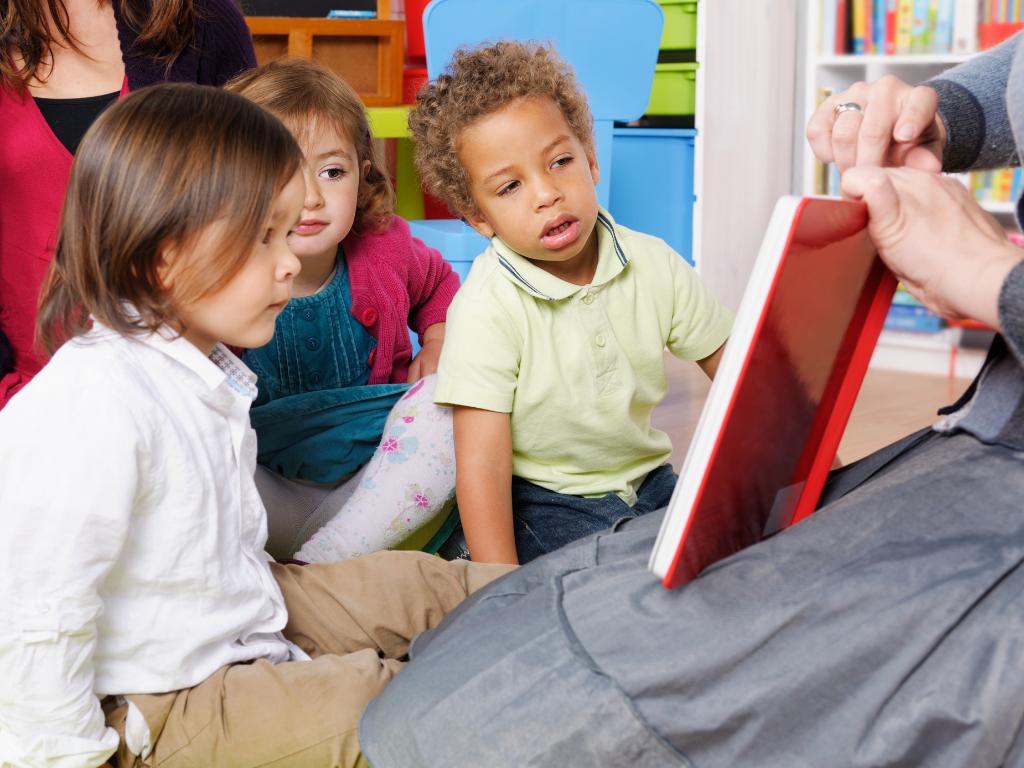
Reading books featuring vegetables can be a great way for children to become familiar and comfortable with vegetables, and this repeated exposure using fun and engaging books can help children feel more confident to try those vegetables when presented at a meal, as well as to enjoy them more. 

Why books?

Studies have found that reading children books featuring vegetables can have a meaningful impact on the amount of vegetables they consumed. In fact, one study found that children who were exposed to vegetable-themed books ate twice as many vegetables after, compared to other children!

While food-themed books are a great way to offer low-pressure positive food exposures in daily routines, reading any books (food-themed or not!) also contributes to children’s learning and development in lots of important ways, such as promoting literacy, numeracy, colour recognition, emotional development, cultural representation, and language development.

Using positive language with books

Story time is a time when children are listening closely to the language we choose to use, including our tone and attitude, so this is an ideal time to be mindful to use positive language.

The way we talk about food contributes to the food culture or food environment in the centre, and in turn, how children think or feel about foods. As much as possible, try to use positive language around all foods, even if it is a food you don’t like or don’t eat yourself. Phrases like “learning to like” can be used instead of “I don’t like that”, or “don’t yuck my yum”. This goes for all food conversations, whether about real food at meal times, or pictures in a story book!

Some story time ready tips to start with include:
  • Draw attention to healthy food choices in any book, regardless of the topic.
  • Use describing words to increase interest. 
  • Talk about the physical properties of the food, not just taste- bumpy, round, smooth, crunchy!
  • Talk about how it grows, or if they have ever grown it at home
  • Talk about your favourite way to enjoy the food, such as tomatoes in spaghetti or snow peas in a stir-fry.
  • Ask the child to find the foods you’ve spotted on the page, or make it trickier using only “eye-spy” clues. 

Example prompts

Here are some examples of questions you might like to ask children as you read along together!

Noticing & Exploring Food

  • “What food can you see on this page?”
  • “What colour is the food?”
  • “Is it big or small? Round or long?”
  • “Does it look smooth, bumpy, crunchy, or soft?”
  • “What food looks interesting to you?”

Curiosity & Sensory Thinking

  • “What do you think this food might feel like if you touched it?”
  • “What sound might it make when you bite it?”
  • “Do you think it’s juicy, crunchy, or soft?”
  • “Is it warm or cold in this picture do you think?”
  • “What do you think would happen if it was cooked?”
  • “Can you find another food that looks similar?”

Connection to Real Life

  • “Have you ever seen this food before?”
  • “Have we eaten this food here or at home before?”
  • “Where do you think this food comes from? Would it grow on trees or underground?”
  • “Does anyone help grow food like this at home or in the garden?”
  • “What do you already know about this food?”

Role Modelling & Shared Experiences

  • “We planted this food in our sensory garden! Do you remember planting the seeds?”
  • “I wonder how this food tastes—I’d like to try it.”
  • “Sometimes I eat this food cooked, and sometimes raw.”
  • “Who might grow or cook this food?”
  • “Have we seen this food in our garden or kitchen?”

Engaging Attention & Playfulness

  • “Can you point to the food on the page?”
  • “Can you find the green food?”
  • “Let’s play eye-spy with a food that’s round.”
  • “Can you count how many foods you can see?”

Describing Language

  • “What words can we use to describe this food?”
  • “What do you notice about it?”
  • “What does it remind you of?”
  • “Do you think this food would be bumpy or smooth to touch?”